Ask any Italian chef which dish they would cook to prove their skill and the answer is almost never a complex ragù or an elaborate risotto. More often than not, they will say pasta al pomodoro. A handful of ingredients, no special equipment, fifteen minutes from start to finish - and yet somehow, it is one of the most demanding dishes in the entire Italian canon. Understanding why tells you everything you need to know about how Italian cooking actually works.
Why Is Pasta al Pomodoro Considered the Hardest Simple Dish?
Pasta al pomodoro is considered difficult because it has nowhere to hide. The dish contains only four or five ingredients - pasta, tomatoes, olive oil, basil, and salt - each one completely exposed, each one asked to carry its full weight. A rich Bolognese can mask mediocre pasta. A cream sauce can compensate for a substandard tomato. Pasta al pomodoro offers no such safety net.
This is why the dish has become a benchmark in Italian kitchen culture. It is the first thing a new cook is asked to make, and the thing a seasoned cook returns to when they want to remember why they love food. The quality of what you use is not a variable - it is the whole point.
What Are the Three Rules of a Perfect Pasta al Pomodoro?
Rule One: The Pasta Shape Matters
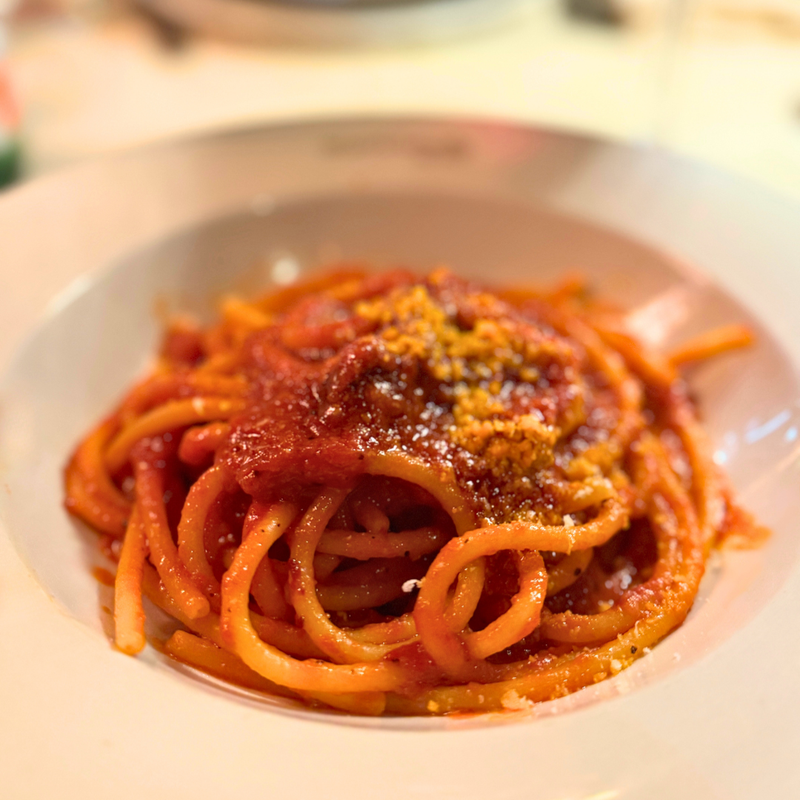
The best pasta for al pomodoro has enough surface area to hold the sauce and enough structural integrity to be cooked al dente without disintegrating. Spaghetti is traditional, but Pastificio Mancini's Bucatini is an exceptional choice. Thick, hollow, and bronze-die cut from durum wheat grown on the Mancini family's own fields in Le Marche, the hollow center holds the sauce inside and out, making every forkful more satisfying.
Cook the pasta two minutes less than the packet suggests, then finish it in the pan with the sauce. This step is non-negotiable.
Rule Two: The Tomato Is Everything
In Italy, pasta al pomodoro was traditionally a seasonal dish made with tomatoes at their August peak. The modern solution is to find a passata that does what fresh summer tomatoes do - concentrated, naturally sweet, deeply flavored, with nothing extraneous added. The Tomato Passata we carry is exactly that - pure, slow-cooked, and made with tomatoes that actually taste like tomatoes.
Heat it gently in a wide pan with a little olive oil, a whole garlic clove you will remove later, and a generous pinch of salt. Cook for ten minutes over medium-low heat - no more. The goal is to concentrate the flavor, not cook it to death.
Rule Three: The Olive Oil Is Not a Garnish - It Is Structural
Many home cooks treat olive oil as a finishing drizzle. In pasta al pomodoro, it is one of the primary building blocks. It emulsifies with the tomato sauce during the final toss in the pan, creating the glossy coating that separates a great plate from a mediocre one. Use too little and the sauce is thin. Use the right amount and something genuinely remarkable happens.
Ta Tè Extra Virgin Olive Oil DOP from I Potti di Fratini in Colli Martani, Umbria is our recommendation - aromatic, balanced, and award-winning. Use it generously, both in the sauce and as a final drizzle before serving.
How Do You Make Authentic Pasta al Pomodoro? Step by Step
-
Make the sauce first. Warm olive oil in a wide pan, add a peeled whole garlic clove, let it turn golden, then remove. Add passata, season generously, and cook over medium-low heat for 10 minutes.
-
Cook the pasta in heavily salted water. The water should taste like the sea. Cook for two minutes less than the packet suggests.
-
Reserve a ladle of pasta cooking water before draining. This starchy water is what allows the sauce to cling to the pasta. It is the single most important thing most home cooks forget.
-
Finish in the pan. Add drained pasta directly into the sauce pan. Add a splash of cooking water. Toss over medium heat for two minutes until the sauce coats every strand completely.
-
Serve immediately. Remove from heat. Add a final drizzle of olive oil and torn fresh basil. Do not wait.
Should You Add Parmigiano Reggiano to Pasta al Pomodoro?
Adding Parmigiano Reggiano to pasta al pomodoro is technically controversial - Italian purists argue that cheese has no place on a tomato-based pasta. In practice, most Italian home cooks add it anyway. A 24-month aged DOP wedge grated generously over the hot pasta transforms the dish, adding a nutty, crystalline depth that dissolves into the sauce rather than sitting on top of it.
Our Parmigiano Reggiano 24 Months DOP is the right choice here - properly aged, deeply savory, and with the granular texture that only comes from genuine DOP production. Even the purists privately appreciate it.
Why Does Pasta al Pomodoro Matter?
Pasta al pomodoro is not a weeknight shortcut. It is a philosophy - the Italian conviction that the best cooking comes from the best ingredients, handled with care and eaten without delay. Make it once with the right pasta, the right tomatoes, and the right olive oil, and you will understand immediately why Italian cooks return to it again and again.
There is no better argument for keeping a properly stocked pantry.
Frequently Asked Questions
What makes pasta al pomodoro different from other tomato pasta dishes?
Pasta al pomodoro uses only four or five ingredients - pasta, tomatoes, olive oil, basil, and salt - with no meat, cream, or complex additions. The simplicity means every ingredient is completely exposed, making the quality of each component essential to the final result.
What is the best pasta shape for pasta al pomodoro?
Spaghetti is the most traditional choice, but bucatini works exceptionally well because the hollow center holds the sauce both inside and out. The key is a bronze-die cut pasta with a rough surface that allows the sauce to cling properly.
How long should you cook the tomato sauce for pasta al pomodoro?
The tomato sauce should cook for no more than 10 minutes over medium-low heat. The goal is to concentrate the flavor without cooking out the natural sweetness of the tomatoes.
Should you add Parmigiano Reggiano to pasta al pomodoro?
Adding Parmigiano Reggiano is technically controversial among Italian purists, but most Italian home cooks add it. A 24-month aged DOP wedge adds a nutty depth that complements the tomato beautifully and dissolves into the hot pasta rather than sitting on top.
What is the most important technique in pasta al pomodoro?
Finishing the pasta in the sauce pan - not draining it into a bowl - is the single most important technique. Combined with a splash of starchy pasta cooking water, this creates the glossy, cohesive coating that defines a great pasta al pomodoro.