The best Christmas presents for clients don't shout "transaction." They whisper "relationship." When December rolls around and your inbox fills with requests for bulk orders of logo mugs and generic fruit baskets, it's worth remembering that the most memorable gifts speak to something deeper. They show you've paid attention. They offer a glimpse into a world your clients might not have discovered on their own. And if that world happens to be the sun-drenched hills of Tuscany or the family-run workshops of Piedmont, all the better.
Why Christmas Presents for Clients Matter More Than Ever
Business relationships in 2026 are built on more than quarterly reviews and coffee meetings. Your clients have choices. They have competitors courting them with lower prices and flashier pitches. What keeps them loyal is the feeling that you see them as people, not account numbers.
The data supports this intuition. According to Reachdesk's corporate gifting benchmark report, personalized gifts generate significantly higher engagement rates than generic branded items. Recipients remember who made them feel valued during the busiest season of the year.
But thoughtful gifting requires more than good intentions. It demands attention to timing, presentation, and appropriateness. Some companies struggle with the ethical dimensions of business gifts, wondering where appreciation ends and undue influence begins. The IESE Business School offers useful guidance on maintaining professional boundaries while still expressing genuine gratitude.
The Tax Implications You Should Know
Before you order fifty gift boxes, understand the rules. The IRS permits businesses to deduct up to $25 per person for business gifts, a limit that has remained unchanged for decades. Publication 463 provides comprehensive guidance on what qualifies, how to document expenses, and what "incidental costs" like engraving or shipping mean for your deduction.
Some companies treat client gifts as de minimis fringe benefits, particularly when the value is small and the gifts infrequent. Consult your accountant, but know that proper recordkeeping protects you if questions arise.
The Appeal of Italian Gourmet Gifts as Christmas Presents for Clients
Italy doesn't just export food. It exports stories. Every bottle of olive oil connects to a specific grove. Every wedge of Parmigiano Reggiano represents months of careful aging in a temperature-controlled room in Emilia-Romagna. When you give Italian gourmet products, you're offering your clients a passport to these traditions.
Authenticity matters. Your clients can buy chocolate anywhere. They can order coffee from a dozen subscription services. What they can't easily access is the honey harvested by third-generation beekeepers in the foothills of the Alps or pasta extruded through bronze dies the way it was a century ago.
These products carry certification marks (D.O.P., I.G.P., Biologico) that guarantee origin and method. They're not mass-produced in anonymous facilities. They come from named artisans whose families have perfected their craft over generations. This narrative depth transforms a simple gift into a conversation starter, something your clients will mention at their own holiday gatherings.
What Makes Gourmet Food Gifts Work for Corporate Settings
Food gifts solve several corporate gifting challenges simultaneously:
-
Universal appeal: Dietary restrictions aside, everyone appreciates quality food
-
Shareable value: Gifts can be enjoyed with family, team members, or at office celebrations
-
Appropriate boundaries: Food doesn't carry the same ethical concerns as expensive electronics or luxury goods
-
Memory creation: Taste is linked to memory more powerfully than almost any other sense
-
Cultural bridge: International products spark curiosity and conversation
Many businesses find that curated corporate gift options allow them to maintain consistency across their client list while still offering variety. You're not sending identical boxes to everyone. You're offering a selection that lets you match gifts to recipient preferences.
Choosing the Right Christmas Presents for Clients Based on Relationship Depth
Not all client relationships deserve the same investment. A first-year client who placed one small order requires different treatment than a five-year partner who refers new business quarterly. Strategic gifting recognizes these distinctions.
| Relationship Level |
Budget Range |
Gift Approach |
Example Products |
| New/Emerging |
$30-50 |
Single premium item |
Artisan chocolate, specialty olive oil |
| Established |
$50-100 |
Small curated collection |
Pasta kit, breakfast assortment |
| Strategic Partner |
$100-200+ |
Comprehensive gift box |
Multi-item gourmet collection |
This tiered approach ensures your budget stretches appropriately while maintaining quality across all gifts. The goal isn't to impress with expense but with thoughtfulness.
Personalization Without Crossing Boundaries
The line between "thoughtful" and "intrusive" is thinner than you might think. Deep personalization requires data about client preferences, and collecting that data raises privacy questions. The UK's Information Commissioner's Office provides guidance on lawful data collection and use, principles that apply beyond Britain's borders in our interconnected business world.
Safe personalization focuses on:
-
Company size and structure (individual treats vs. team-shareable items)
-
Known dietary preferences (vegan, gluten-free, organic priorities)
-
Previous positive responses (noting what they enjoyed last year)
-
Industry-appropriate messaging (financial services may require more conservative presentation)
You don't need to know their favorite color or their spouse's name to make a gift feel personal. You just need to show you've considered their context.
Premium Italian Products That Make Exceptional Christmas Presents for Clients
Italy's regional diversity means the gift possibilities extend far beyond pasta and wine. Each area specializes in products that reflect its climate, history, and agricultural traditions.
Honey from Italian Apiaries
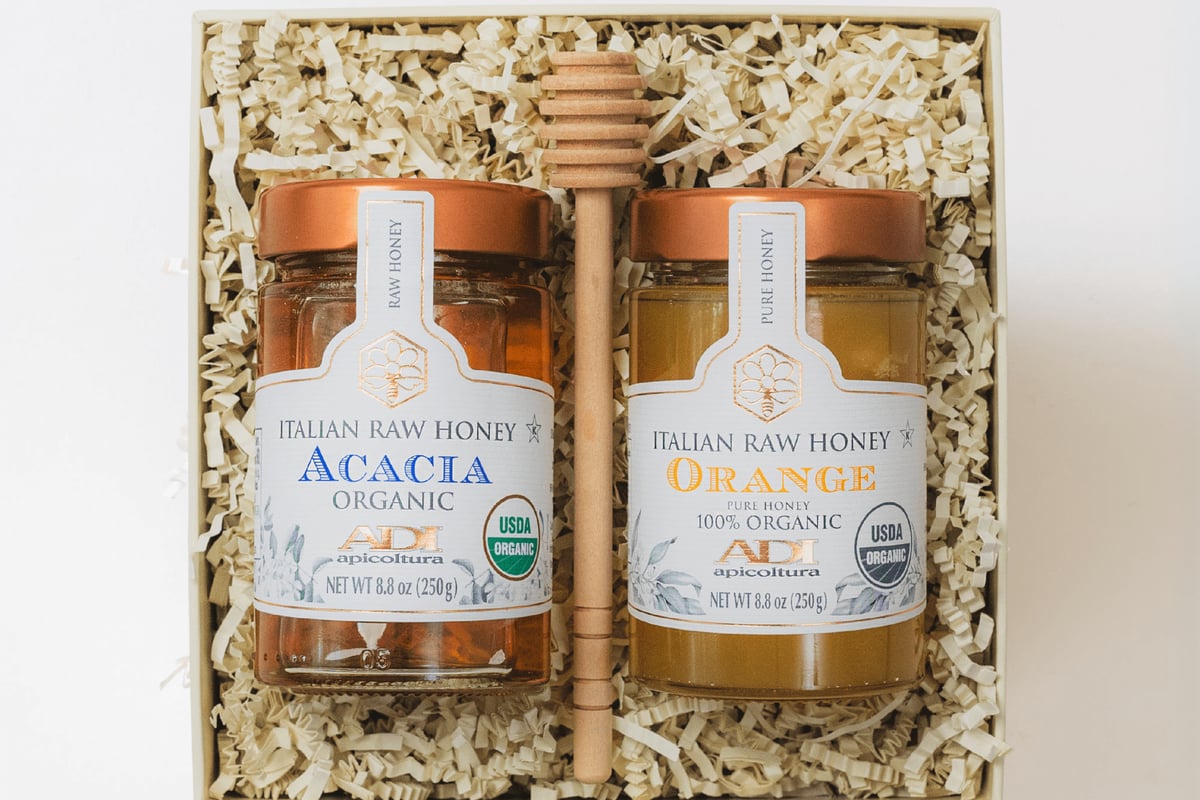
Italian beekeepers move their hives seasonally, following blooms across different elevations and regions. This transumanza creates single-flower honeys with distinct flavors: acacia's delicate sweetness, chestnut's robust earthiness, orange blossom's floral notes. For clients who appreciate natural, minimally processed foods, artisan honey offers sophistication without pretension.
When you find yourself looking for a gift that combines health consciousness with indulgence, Italian honey beautifully serves both masters. Organic certification ensures sustainable practices while supporting small-scale producers who maintain traditional methods. The Bee Healthy collection exemplifies this balance, offering connoisseurs multiple varietals plus a honey dipper for proper serving.
Pasta and Sauce Pairings
Americans eat pasta, but they rarely experience it the way Italians do. The difference lies in quality of ingredients and understanding of pairings. Bronze-die extrusion creates a rough surface that holds sauce. Slow drying at low temperatures preserves nutritional value and produces superior texture.
A complete pasta kit removes guesswork. Your clients receive pasta, sauce, and finishing oil selected to complement each other. They're not assembling ingredients from their pantry. They're following a tested formula that delivers restaurant-quality results at home.
Regional Olive Oils
Extra virgin olive oil is not a commodity. A Tuscan oil's peppery finish differs dramatically from Puglia's grassy notes or Sicily's almond undertones. Harvest timing, olive variety, and processing speed all influence the final product.
Consider your audience carefully. Clients new to premium olive oil might find intensely robust Tuscan oils overwhelming. Milder Ligurian varieties offer a gentler introduction. More adventurous food lovers appreciate the bold personality of southern oils.
Artisan Chocolate and Confections
Italian chocolate heritage runs deep, particularly in Piedmont where hazelnuts and cacao meet in perfect harmony. Craft chocolatiers source single-origin cacao and local Tonda Gentile hazelnuts to create products that balance richness with elegance.
These aren't mass-market treats. They're small-batch productions made by chocolatiers who view their work as craft rather than manufacturing. The difference shows in both taste and presentation.
Presentation Matters: How Christmas Presents for Clients Should Arrive
You've selected perfect products. Now ensure they arrive perfectly. Presentation extends your brand impression from the moment your client sees the package.
Professional packaging communicates care through:
- Sturdy shipping containers that protect contents during transit
- Interior arrangement that prevents shifting and breakage
- Gift-ready presentation that doesn't require rewrapping
- Cards or enclosures with personalized messages
- Clear information about contents for recipients with dietary restrictions
For businesses managing large client lists, corporate gifting services handle logistics from selection through delivery. You provide recipient lists and any customization requirements. The service manages inventory, packing, shipping, and tracking.
Timing Your Gift Delivery
December gets crowded. Packages arrive daily at offices and homes. Your gift can get lost in the shuffle unless you time delivery strategically.
| Delivery Window |
Advantages |
Considerations |
| Early December (1st-10th) |
Arrives before chaos, stands out, demonstrates planning |
May feel premature, less immediate connection to Christmas |
| Mid-December (11th-18th) |
Traditional timing, clearly holiday-related |
Competes with many other deliveries |
| Late December (19th-23rd) |
Arrives during actual holiday week, feels timely |
Shipping delays possible, offices may close early |
Many businesses split the difference, targeting December 10-15 for optimal impact and reliability.
Navigating Dietary Restrictions and Preferences in Christmas Presents for Clients
Food gifts carry inherent risk: what if your client can't eat what you've sent? Modern businesses must account for increasingly diverse dietary requirements.
Common Restrictions to Consider
-
Gluten-free: Celiac disease and gluten sensitivity affect millions
-
Vegan/vegetarian: Plant-based eating continues growing
-
Nut allergies: Severe allergies require careful ingredient screening
-
Kosher/Halal: Religious dietary laws matter to observant clients
-
Low-sugar: Health concerns drive reduced sugar consumption
The safest approach combines options. Curated collections that include multiple products increase the likelihood something will work for everyone. Alternatively, offering choice lets clients select from several gift options rather than receiving a predetermined box.
Upscale corporate gifts can maintain their premium positioning while accommodating restrictions through careful product selection and transparent ingredient disclosure.
Building Long-Term Client Relationships Through Consistent Gifting
One December gift doesn't transform a relationship. Consistency does. Strategic businesses view holiday gifting as one touchpoint in year-round relationship cultivation.
Consider the annual cycle:
-
Spring: Milestone celebrations (contract anniversaries, company achievements)
-
Summer: Small appreciation gestures during slower business periods
-
Fall: Recognition of project completions or successful launches
-
Winter: Year-end thank you and holiday celebration
This cadence keeps you present without overwhelming clients. Research published in the Journal of Business Ethics suggests that consistent, moderate gifting strengthens business relationships more effectively than occasional expensive gestures.
Creating a Gift Calendar
Professional gift programs operate on calendars, not impulse. Three months before December, you should be:
- Reviewing client list for accuracy
- Noting any relationship changes (new contacts, departures)
- Confirming shipping addresses
- Setting budget allocations
- Researching new product options
- Planning customization or personalization
This timeline prevents December panic and ensures thoughtful execution. Business owner gift strategies often emphasize planning over spontaneity.
Scaling Your Christmas Presents for Clients Program
Ten clients require different logistics than one hundred. As your business grows, your gifting program must scale without losing the personal touch that made it effective.
Systems for Managing Large Client Lists
Professional customer relationship management systems track gifting history, preferences, and responses. You record what each client received, when it shipped, and any feedback. Next year, you build on that knowledge.
Key data points to track:
- Previous gifts sent and dates
- Recipient reactions or thank-you notes
- Known preferences or restrictions
- Budget allocation per client tier
- Shipping addresses and contact updates
Women-owned service businesses navigating growth challenges can find operational frameworks through consultancies like Rise Reign Rule, which help establish systems that support scaling without sacrificing quality or personal attention.
Working with Specialized Vendors
Generic corporate gift vendors offer convenience but rarely deliver distinction. Specialized providers who focus on specific product categories (gourmet food, artisan goods, regional specialties) bring deeper knowledge and better curation.
When evaluating vendors, ask about:
-
Sourcing practices: Do they work directly with producers?
-
Customization options: Can they accommodate special requests?
-
Shipping capabilities: What's their on-time delivery rate?
-
Minimum orders: Do volume requirements match your needs?
-
Sample availability: Can you taste/see products before committing?
Building relationships with suppliers who understand your standards creates consistency across years while allowing evolution as your needs change.
The ROI of Thoughtful Christmas Presents for Clients
Finance departments reasonably ask whether client gifts justify their cost. Attribution is difficult, but the question deserves serious answers.
Measuring gift program effectiveness:
- Client retention rates compared to previous years
- Referral frequency from gifted clients vs. non-gifted clients
- Renewal timing and negotiation ease
- Unsolicited positive feedback or social media mentions
- Year-over-year revenue from longstanding clients
Some effects manifest immediately. Others compound over years. A client who receives thoughtful gifts annually develops expectations. When you pause the program, they notice. This consistency creates subtle loyalty reinforcement that's difficult to quantify but real in its impact.
Beyond financial returns, gifting contributes to corporate culture. Your team takes pride in representing a company that values relationships beyond contracts. If you're in high-touch service industries, this culture distinction attracts better talent and strengthens client service delivery.
Creative Alternatives to Traditional Christmas Presents for Clients
Not every client relationship calls for physical gifts. Some situations benefit from alternative expressions of appreciation.
Experience-Based Recognition
-
Virtual tastings: Host online events where clients explore products together
-
Charitable donations: Contribute to causes aligned with client values
-
Educational content: Share exclusive insights, reports, or training access
-
Personalized videos: Record thank-you messages from team members
These approaches work particularly well for clients with strict gift acceptance policies or those who prefer minimalist lifestyles. They demonstrate creativity while respecting boundaries.
Industry-Specific Gift Ideas
Different sectors respond to different gestures. Legal and financial services clients may face stricter compliance requirements. Creative industries often appreciate more experimental products. Manufacturing clients might value practical items for office or break room use.
Understanding these nuances prevents missteps. A gift that delights a tech startup founder might perplex a conservative accounting firm partner. Company gift ideas for clients explore these sector-specific considerations in depth.
Emerging Trends in Christmas Presents for Clients for 2026
Corporate gifting evolves with broader cultural shifts. Several trends are reshaping how businesses approach client appreciation this year.
Sustainability and Transparency
Clients increasingly care about environmental impact and ethical sourcing. They want to know where products come from, how they're made, and what happens to packaging. Gifts that tell authentic origin stories while demonstrating environmental consciousness align with these values.
Italian artisan products naturally fit this trend. Small-scale producers using traditional methods often have inherently sustainable practices. They source locally, minimize processing, and maintain generational knowledge rather than pursuing industrial efficiency.
Supporting Small Businesses
Corporate buyers recognize that their purchasing decisions shape economies. Choosing products from family-run workshops rather than multinational corporations becomes a value statement.
This preference extends to gift presentation. Companies like CCN Sport demonstrate how blending traditional craftsmanship with modern technology creates premium products with authentic stories. Their approach to custom manufacturing shows that quality and efficiency can coexist.
Health and Wellness Focus
The wellness trend that dominated consumer markets now influences corporate gifting. Clients appreciate gifts that support healthy lifestyles without feeling preachy or restrictive.
Italian food culture offers a natural wellness angle. The Mediterranean diet's health benefits are well-documented. Products emphasizing organic certification, minimal processing, and nutrient density appeal to health-conscious recipients while still delivering indulgence and flavor.
Common Mistakes to Avoid with Christmas Presents for Clients
Even well-intentioned gifting programs can stumble. Awareness of common pitfalls helps you avoid them.
Errors That Undermine Gift Impact
-
Generic presentation: Logo-heavy packaging that screams "bulk order"
-
Poor timing: Gifts arriving in January because you procrastinated
-
Inappropriate value: Either too expensive (creating discomfort) or too cheap (seeming perfunctory)
-
Ignoring feedback: Sending identical gifts year after year despite lukewarm reception
-
Missing key clients: Incomplete lists that leave important relationships unacknowledged
Quality control matters. One damaged or spoiled item in an otherwise perfect box undermines the entire gesture. Work with vendors who guarantee freshness and offer replacement policies for shipping damage.
The Curse of One-Size-Fits-All
Efficiency tempts businesses toward uniform gifting. Everyone receives the same box. It's simpler to order, easier to track, and requires minimal decision-making.
But this efficiency costs impact. Your clients know they received the same gift as everyone else on your list. The gesture feels transactional rather than relational.
Better approaches segment your client list into tiers or categories, then select appropriate gifts for each group. You maintain reasonable efficiency while preserving the sense that each gift was chosen with specific recipients in mind.
Thoughtful Christmas presents for clients strengthen the relationships that sustain your business through changing markets and competitive pressures. When you move beyond generic gestures toward gifts that reflect authentic quality and cultural richness, you create memorable moments that compound year after year. Tasty Ribbon offers curated collections of Italian artisan products that transform client appreciation into genuine connection, with options for ready-made selections or custom boxes tailored to your specific needs. Whether you're thanking a handful of key partners or managing a comprehensive corporate gifting program, the right Italian gourmet gifts communicate respect, sophistication, and lasting value.