Best pasta I’ve ever had and the only pasta I purchase now.
A delicious mild acacia honey well packed for shipping as well

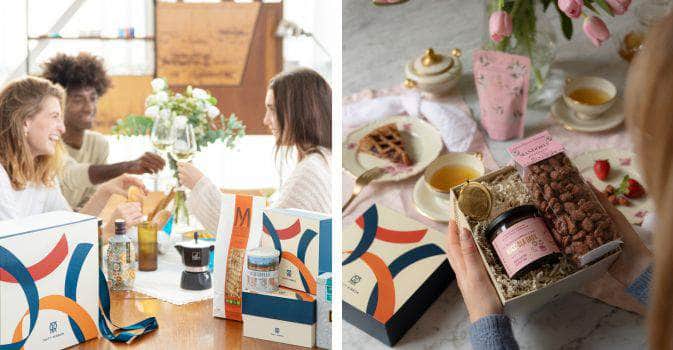
Every culture has its Easter centerpiece. In Italy, it has always been the Colomba - a soft, golden, dove-shaped cake that arrives on tables across the country every spring with the reliability of the season itself. If you have never heard of it, you are not alone. Outside of Italy, the Colomba remains one of those quietly extraordinary things that most of the world has yet to discover. Consider this your introduction.
The name Colomba means dove in Italian, and the shape is no accident. The dove has been a symbol of peace and renewal across cultures for centuries - and in Italy, where Easter carries both religious and seasonal significance, it became the natural form for the spring celebration cake. Every year, as winter gives way to warmer days, the Colomba appears in bakery windows and on family tables as a kind of edible announcement: spring is here, the season of new beginnings has arrived.
The symbolism runs deeper than the shape. The Colomba is traditionally made with a natural sourdough starter - a living culture that bakers tend to for years, sometimes decades. The slow, patient leavening process gives the cake its characteristic soft, almost cloud-like texture. There is something quietly poetic about a cake that requires patience to make, arriving at the season that rewards slowing down.
Like most beloved Italian traditions, the Colomba comes with more than one origin story - and all of them are worth knowing.
The most romantic traces back to the sixth century, when Queen Theodolinda of the Lombards allegedly hosted a group of Irish pilgrims led by Saint Columbanus. Being Lent, the pilgrims were reluctant to eat the lavish meat banquet laid before them. According to legend, Saint Columbanus blessed the table and transformed everything into soft, dove-shaped breads - a miraculous gesture of peace that satisfied both host and guests.
Another legend connects the Colomba to the Battle of Legnano in 1176, when the cities of the Lombard League defeated Emperor Frederick Barbarossa. Before the battle, the Lombard leader saw two doves alight on the insignia of the League and interpreted it as a sign of divine favor. He ordered loaves baked in the shape of doves to inspire his soldiers - and won. Whether or not the story is literally true, it reflects how deeply the dove shape has been woven into the culture of northern Italy for centuries.
The most historically grounded story, however, is considerably more recent. In 1934, a Milanese advertising director named Dino Villani - one of Italy's most creative minds of the era - came up with a brilliantly practical idea. He was working for Motta, the Milanese company already famous for its panettone, and realized that the same machinery, the same dough, and many of the same techniques used to make the Christmas cake could be adapted to create an Easter equivalent. The result was the Colomba as we know it today - dove-shaped, finished with a distinctive almond glaze, and an immediate nationwide success. Motta sent the first batches to writers and journalists, whose response was unanimous: the cake that one critic called "a symbol of peace and spring" had arrived.
Not all Colomba cakes are created equal. Like panettone, the quality varies enormously depending on who is making it and how. Industrial versions, which dominate supermarket shelves across Italy every spring, bear little resemblance to the handcrafted originals produced by the country's finest pastry houses.
Pasticceria Cova is one of those pastry houses. Founded in 1817 by Antonio Cova - a Napoleonic soldier - the original café opened its doors next to Teatro alla Scala in the heart of Milan, becoming a gathering place for artists, intellectuals, musicians, and the city's cultural elite. Ernest Hemingway was a regular. So was Giuseppe Verdi. In 1950, the pasticceria relocated to Via Montenapoleone - Milan's most celebrated shopping street - where it continues to operate today as one of the city's most enduring institutions, now part of the LVMH group.
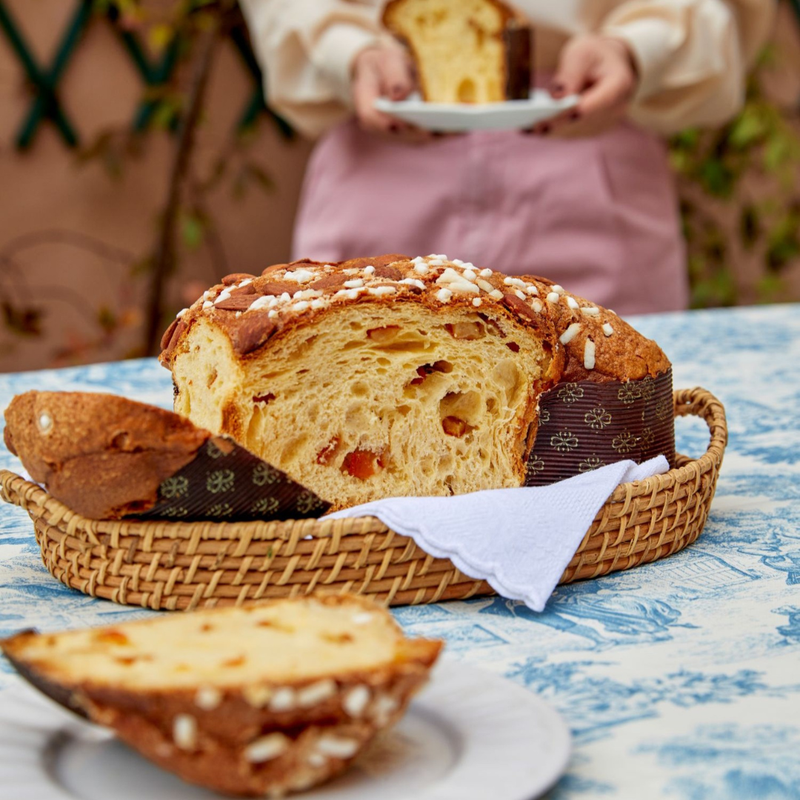
Their Colomba is made the way it has always been made at the finest Milanese pastry houses: slow-leavened with a natural sourdough starter, enriched with the finest butter, sugar, and plump candied orange peel, and finished with a delicate almond glaze that gives it a subtle crunch against the pillowy interior. The Traditional Colomba is the purest expression of the form - golden, fragrant, and impossible to stop eating once you have started. Their Chocolate Colomba takes the same extraordinary dough and folds in generous dark chocolate chips for those who believe, quite reasonably, that chocolate improves most things.
What makes Cova's Colomba worth seeking out is not just the recipe - it is the restraint. In a world where every artisan product competes to be the most extreme version of itself, Cova makes a cake that is simply, perfectly itself. No unnecessary additions, no novelty flavors. Just exceptional ingredients, handled with the kind of care that two centuries of practice produces.
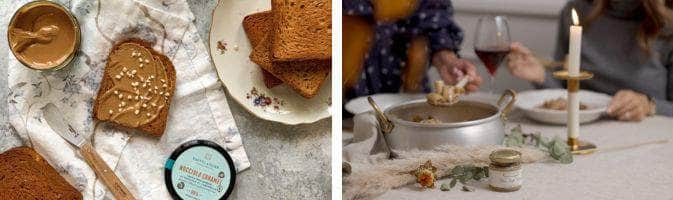
The Colomba has its own rituals - and they are worth adopting. In most Italian households, it appears on the Easter breakfast table alongside hard-boiled eggs, cured meats, and strong coffee. Sliced thickly and eaten with a generous spread of something sweet - a Hazelnut Chocolate Caramel Spread works extraordinarily well - it turns the first meal of Easter morning into an occasion rather than a routine.
It reappears after the main Easter lunch as a dessert, often accompanied by a glass of Moscato d'Asti or a sweet sparkling wine. And on Easter Monday - Pasquetta, the day when Italians traditionally pack leftovers and head outdoors - leftover Colomba is tucked into picnic baskets alongside everything else worth saving from the day before.
The Colomba, in other words, is not a single-occasion cake. It is an Easter companion - present at the beginning of the day and the end of it, at the formal table and the casual one.
The best food traditions are the ones that make an ordinary moment feel extraordinary. The Colomba, with its golden crust and cloud-soft interior, its centuries of legend and its simple, elegant flavor, is exactly that kind of tradition. It does not require explanation or ceremony. You simply place it on the table, slice it, and let it do what it has been doing on Italian Easter tables for generations.
This Easter, consider starting your own tradition. It does not have to be Italian to be yours.