There's a specific moment that happens in offices everywhere, usually right before the holidays or around milestone anniversaries. Someone from HR opens a catalog, scrolls through generic logo mugs and branded pens, and sighs. The ritual of corporate gift-giving has become so disconnected from its original intention that many companies go through the motions without truly considering what these tokens of appreciation communicate. But what if employee gifts could transcend the transactional and become genuine expressions of gratitude? What if each carefully chosen item could spark joy, create conversation, and remind team members that they're valued as individuals, not just workforce numbers?
Understanding the Modern Landscape of Employee Recognition
The workplace has transformed dramatically in recent years. Remote teams span continents, hybrid models blur the lines between home and office, and employees increasingly seek meaning beyond paychecks. According to recent research on workplace gift-giving, thoughtful recognition through gifts significantly impacts employee motivation and creates a stronger sense of belonging within organizational culture.
Corporate gifts for employees have evolved from perfunctory gestures to strategic tools for building authentic relationships. The best gifts tell stories, create experiences, and demonstrate that leadership truly understands what matters to their teams. When you present someone with something carefully curated, you're essentially saying: "I see you. I appreciate you. You matter here."
The Psychology Behind Meaningful Recognition
Recognition feeds a fundamental human need. We want to feel acknowledged for our contributions and valued as individuals. When organizations invest thought and care into employee appreciation, they create emotional connections that transcend traditional employer-employee dynamics.
Studies reveal fascinating insights about what resonates. Employees consistently prioritize:
-
Personalization: Gifts that reflect individual preferences or acknowledge specific achievements
-
Quality over quantity: A single exceptional item outweighs multiple forgettable ones
-
Experiential value: Items that create moments or memories rather than clutter
-
Cultural authenticity: Gifts with genuine stories and craftsmanship behind them
The difference between a gift that gets relegated to a storage closet and one that becomes a conversation piece often comes down to intentionality. Does this gift feel chosen, or does it feel assigned?
The Cultural Dimension of Gourmet Gift-Giving
Italian culture has elevated the art of gift-giving to something transcendent. The concept of la bella figura (making a beautiful impression) extends beyond appearances to encompass thoughtfulness, quality, and the joy of sharing good things with others. When Italians give gifts, especially food gifts, they're sharing pieces of their heritage, their regional pride, and their commitment to celebrating life's pleasures.
Gourmet food gifts carry particular resonance because they engage multiple senses. The rich aroma of Parmigiano Reggiano, the jewel-like appearance of artisanal preserves in hand-blown glass jars, the satisfying weight of premium olive oil bottles. These items transform corporate gifts for employees into sensory experiences that linger in memory long after the moment of unwrapping.
Regional Stories That Connect
Every authentic Italian product carries the story of its origin. The sfusato amalfitano lemons from the Amalfi Coast, cultivated on terraced groves overlooking the Mediterranean. The hazelnuts from Piedmont's Langhe hills, where morning mist creates perfect growing conditions. These aren't just ingredients; they're narratives of place, tradition, and generational knowledge.
When you choose corporate gifting solutions rooted in these authentic traditions, you're offering employees more than consumables. You're inviting them on a journey, introducing them to the passionate artisans who still craft products by hand using methods passed down through centuries.
Consider the impact of these narrative elements:
- Provenance that connects to specific Italian regions and their unique terroirs
- Artisan partnerships that support small-scale traditional producers
- Production methods that honor time-tested techniques over industrial shortcuts
- Seasonal availability that reflects natural growing cycles and harvest traditions
- Quality certifications like DOP and IGP that guarantee authenticity
These details matter because they demonstrate that someone cared enough to seek out the exceptional rather than settle for the convenient.
Strategic Timing and Occasions for Employee Gifts
While many organizations default to end-of-year gifting, the most memorable recognition often happens when it's unexpected. Strategic timing amplifies impact and shows that appreciation isn't confined to obligatory calendar dates.
| Occasion |
Why It Resonates |
Gift Approach |
| Work anniversaries |
Acknowledges individual tenure and loyalty |
Personalized to years of service or role |
| Project completions |
Celebrates collective achievement |
Team-focused, shareable items |
| Professional milestones |
Recognizes growth and advancement |
Elevated, sophisticated selections |
| Seasonal celebrations |
Builds culture and shared experiences |
Culturally authentic, festive options |
| Random appreciation |
Surprises and delights unexpectedly |
Thoughtful, no-strings-attached tokens |
The element of surprise transforms giving into something memorable. When employees receive recognition outside predictable patterns, it signals genuine appreciation rather than procedural obligation. Understanding current trends in corporate gifting reveals that personalized and experiential rewards consistently outperform generic alternatives in building engagement and retention.
Building Year-Round Recognition Programs
Rather than concentrating gift-giving into single annual moments, consider distributing appreciation throughout the year. Quarterly gifting creates regular touchpoints that reinforce organizational values and maintain positive momentum. It also prevents the overwhelm of last-minute bulk ordering and allows for more thoughtful curation.
Monthly recognition programs can acknowledge different departments, celebrate birthdays, or highlight specific achievements. This approach keeps appreciation visible and ongoing rather than making it a once-yearly checkbox exercise.
Curating Gifts That Reflect Organizational Values
Corporate gifts for employees communicate volumes about company culture and priorities. Organizations committed to sustainability shouldn't distribute disposable items. Companies that emphasize innovation and creativity benefit from gifts that inspire those qualities. Alignment between stated values and gifting choices reinforces authenticity.
Italian artisanal products naturally align with values like:
-
Quality craftsmanship: Supporting makers who prioritize excellence over mass production
-
Sustainability: Small-batch production with minimal environmental impact
-
Cultural appreciation: Celebrating global traditions and diverse heritage
-
Authentic connections: Building relationships with producers and their stories
-
Mindful consumption: Choosing fewer, better things over throwaway abundance
When gifts embody these principles, they become extensions of your organizational identity rather than disconnected promotional items.
The Importance of Presentation
Italians understand that presentation is part of the gift. The care invested in wrapping, packaging, and presenting creates anticipation and communicates respect for the recipient. Beautiful packaging transforms the unwrapping into a ritual, slowing down the moment and making it more memorable.
Consider how expert guidance on gift-giving practices emphasizes presentation as a crucial element of successful corporate gifting. The visual appeal of artfully arranged products in elegant boxes signals that this isn't just another corporate distribution-it's something special.
Navigating Dietary Preferences and Inclusivity
Thoughtful corporate gift-giving requires awareness of diverse dietary needs, preferences, and restrictions. The beauty of gourmet food gifts lies in their versatility and the ability to curate selections that accommodate various requirements without making anyone feel excluded.
Key considerations include:
- Offering vegan and vegetarian options alongside traditional selections
- Clearly labeling ingredients for those with allergies or intolerances
- Providing alcohol-free alternatives in collections that feature wine or spirits
- Respecting cultural and religious dietary restrictions
- Creating options at various price points for equitable distribution
Modern Italian artisanal production includes magnificent vegan offerings that showcase the Mediterranean tradition of plant-based excellence. From preserved vegetables to herb-infused oils, from aged balsamic vinegars to fruit preserves, these options delight without compromise.
Accommodating Remote and Hybrid Teams
Geographic distribution presents logistical challenges but shouldn't prevent meaningful recognition. Working with gifting partners who handle fulfillment and shipping allows you to maintain personal touches while managing complex logistics. Digital accompaniment-a personal video message, a handwritten note scanned and included-adds warmth to items arriving via delivery.
For international teams, consider best practices that account for cultural differences and shipping realities. Some artisanal food items travel better than others, and understanding these nuances ensures gifts arrive in optimal condition, ready to be enjoyed.
The Power of Customization and Personal Touches
Generic corporate gifts for employees signal that someone ordered in bulk without considering individual preferences. Customization doesn't necessarily mean personalizing every item with names or initials-it can be as simple as offering selections that acknowledge different tastes and interests.
Building curated collections allows employees to choose items that genuinely excite them. Perhaps one person adores chocolate offerings while another prefers savory items like olives and spreads. Choice respects individual agency and ensures higher satisfaction.
Creating Build-Your-Own Experiences
Some organizations take customization further by allowing employees to build personalized gift boxes from curated selections. This approach combines the convenience of organizational coordination with the satisfaction of personal choice. It also reduces waste, as people select only items they'll actually use and enjoy.
The process itself becomes part of the gift experience. Browsing beautiful options, making selections, anticipating arrival-these moments extend appreciation beyond the physical items.
Budget Considerations and Return on Investment
Corporate gifting requires budget allocation, but the return on investment extends beyond immediate reactions. Research on employee preferences demonstrates that meaningful recognition through gifts significantly impacts motivation and loyalty, potentially reducing turnover costs that far exceed gift budgets.
Strategic approaches to budgeting include:
- Establishing per-person ranges based on role, tenure, or occasion
- Investing more in milestone gifts while maintaining consistent smaller recognitions
- Leveraging partnerships with specialty providers for quality at scale
- Planning ahead to avoid rush charges and limited availability
- Measuring impact through employee feedback and engagement metrics
| Budget Range |
Appropriate Occasions |
Gift Examples |
| Under $50 |
Monthly recognition, birthdays, small wins |
Single artisanal items, specialty ingredients |
| $75-150 |
Quarterly appreciation, project completions |
Curated collections with multiple items |
| Above $150 |
Major milestones, annual recognition, leadership |
Premium selections showcasing rare or aged products |
Quality doesn't always correlate directly with price. A thoughtfully chosen $75 gift can make more impact than a hastily selected $200 one. The difference lies in understanding what resonates with recipients and selecting accordingly.
Seasonal Opportunities for Authentic Italian Gifting
The Italian calendar pulses with seasonal celebrations and culinary traditions that create natural gifting opportunities. Spring brings fresh ingredients and Easter specialties. Summer highlights aperitivo culture and outdoor dining. Autumn celebrates harvest bounty. Winter centers around holiday feasting and sharing.
Aligning corporate gifts for employees with these seasonal rhythms connects them to broader cultural traditions and creates variety throughout the year. Rather than defaulting to the same gift repeatedly, seasonal rotation keeps appreciation fresh and introduces employees to new discoveries.
Spring and Easter Traditions
Italian Easter traditions feature particular delicacies-colomba cakes shaped like doves, chocolate eggs with surprise centers, and the first spring vegetables preserved in olive oil. These items carry symbolic meaning around renewal, celebration, and shared joy that transcends religious context to embrace universal themes of new beginnings. Exploring Easter specialties introduces employees to authentic traditions they might not otherwise encounter.
Autumn Harvest Celebrations
Fall brings truffle season, new olive oil harvests, and preserved autumn vegetables. The earthy richness of these products reflects the season's character and invites cozy evening cooking. Gifts that celebrate autumn's abundance feel particularly appropriate for year-end appreciation or Thanksgiving recognition.
Introducing Employees to Artisan Stories
The most compelling aspect of authentic Italian products isn't just taste-it's the stories behind them. When you share information about the makers, their regions, and their methods, you transform consumables into cultural experiences.
Including cards or booklets that introduce the artisans adds depth to corporate gifts for employees. Employees learn about the Mancini family's generations of pasta-making expertise, or the olive groves that have produced oil for centuries, or the chocolatiers who source cacao directly from sustainable farms.
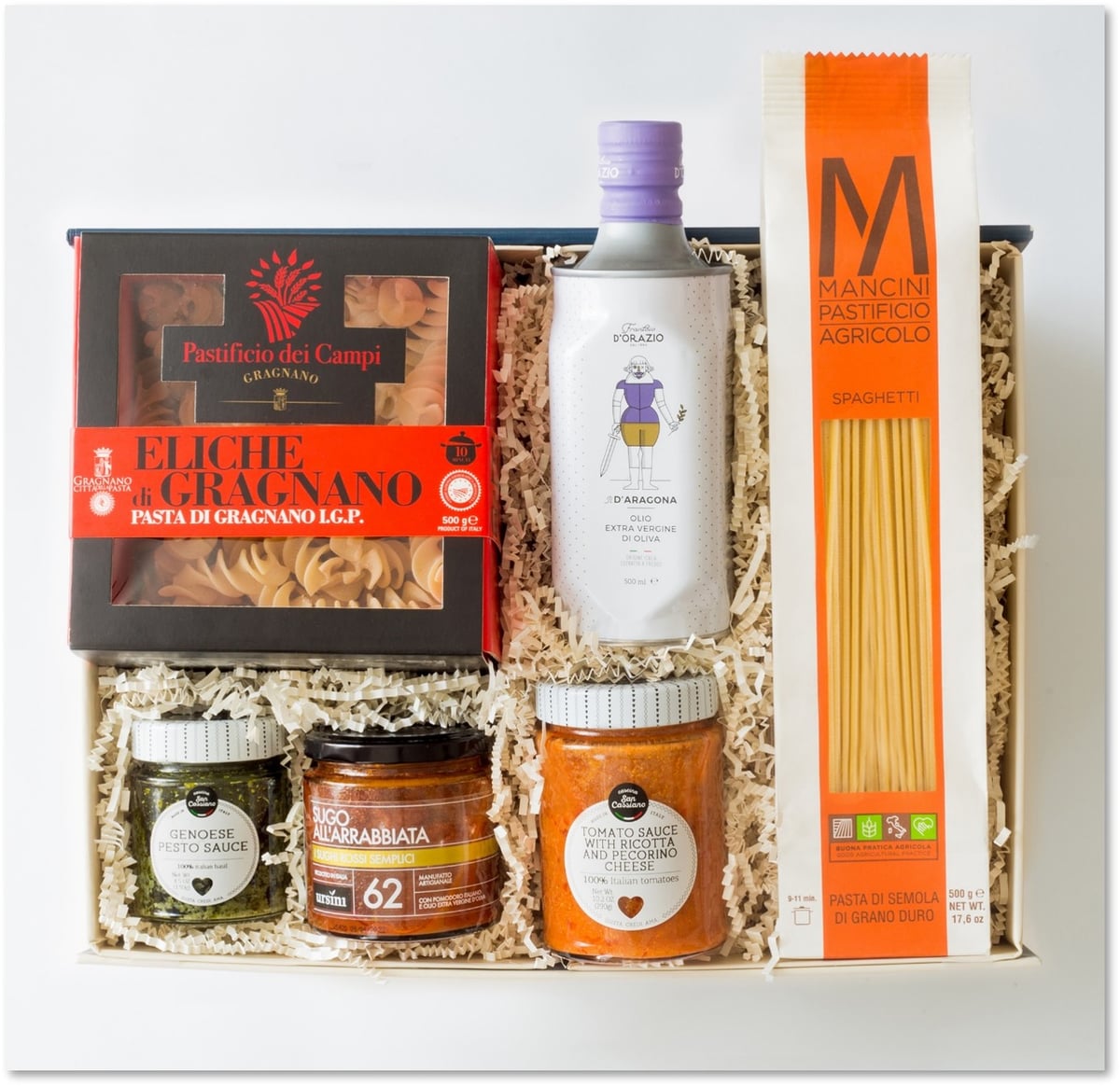
One particularly beautiful introduction to Italian artisanal excellence comes through pasta and sauce pairings. When employees receive a thoughtfully curated selection that teaches them about proper pairings-how certain pasta shapes complement specific sauces, why extra virgin olive oil should be added at the end rather than during cooking-they gain knowledge alongside delicious ingredients. The Pasta 1-0-1 collection embodies this educational approach, featuring Mancini spaghetti, Eliche from Gragnano, Genovese pesto, arrabbiata sauce, and ricotta-pecorino tomato sauce alongside Frantoio d'Orazio extra virgin olive oil. Recipients don't just receive food; they receive the tools to create authentic Italian meals and the understanding of why these particular combinations work so beautifully together.
Transparency and Authenticity
Modern consumers, including your employees, increasingly value transparency about product origins and production methods. Understanding authenticity certifications like DOP (Denominazione di Origine Protetta) and IGP (Indicazione Geografica Protetta) helps recipients appreciate the rigor behind truly authentic Italian products.
These certifications aren't marketing gimmicks-they're legal guarantees that products meet strict geographical and production standards. When gifts carry these designations, they demonstrate commitment to genuine quality rather than Italian-inspired imitations.
Creating Shared Experiences Through Food Gifts
Corporate gifts for employees don't exist in isolation. The best ones spark conversations, create shared experiences, and build community. When multiple team members receive similar gifts, they can share discoveries, exchange recipes, and bond over new favorites.
Food gifts naturally encourage this sharing. Someone brings their artisanal olive oil to a team lunch. Another organizes a pasta-making evening with friends. These moments extend appreciation beyond the initial gift, creating ongoing positive associations with the organization's thoughtfulness.
Virtual Tasting Events
For remote teams, consider pairing gift distribution with virtual tasting events. Send everyone the same selection of products, then schedule a video call where someone knowledgeable guides the group through tasting notes, pairing suggestions, and cultural context. This transforms individual gifts into collective experiences that strengthen team bonds across distances.
These events can feature different themes-olive oil tasting comparing regional varieties, chocolate tasting exploring cacao percentages and origins, or preserved vegetables tasting highlighting seasonal specialties.
Measuring Impact and Gathering Feedback
Effective gifting programs incorporate feedback loops that help refine future selections. Research reveals employee preferences consistently emphasize personalization and thoughtfulness, but specific tastes vary by organization and individual.
Simple post-gift surveys can gather valuable insights:
- Which items did you enjoy most?
- Did the gift feel appropriate for the occasion?
- Would you appreciate similar items in the future?
- Do you have dietary restrictions we should note?
- What would make future gifts more meaningful?
This feedback demonstrates ongoing commitment to getting recognition right and helps avoid repeated missteps. It also shows employees that their opinions matter beyond their job functions.
Long-Term Relationship Building
The goal isn't perfect gifting on the first attempt-it's continuous improvement that reflects growing understanding of your team. Over time, patterns emerge. You learn that marketing loves chocolate while engineering prefers savory items. You discover that newer employees appreciate variety while veterans enjoy deepening their knowledge of specific categories.
This accumulated knowledge transforms corporate gifts for employees from transactions into relationship investments that compound over time.
Sustainability and Ethical Considerations
Modern corporate responsibility extends to gifting choices. Employees increasingly notice whether organizations practice the values they preach, and gifts provide tangible evidence of commitment or hypocrisy.
Italian artisanal production tends to align naturally with sustainable practices. Small-batch creation minimizes waste. Traditional methods often require less energy than industrial alternatives. Direct relationships with producers support local economies and preserve cultural heritage.
Key ethical considerations include:
- Supporting small producers over industrial conglomerates
- Choosing minimal, recyclable, or reusable packaging
- Prioritizing seasonal products over year-round availability requiring extensive intervention
- Selecting fair-trade or ethically certified products when available
- Avoiding products with excessive air-mile footprints when possible
Communicating these values alongside gifts reinforces organizational commitment and educates employees about conscious consumption.
Building Anticipation and Ritual
Some organizations create annual traditions around corporate gifts for employees that become anticipated highlights of the year. These rituals strengthen culture by establishing shared touchpoints that everyone experiences together.
Perhaps every October brings harvest-themed gifts celebrating autumn abundance. Maybe spring always features lighter, brighter flavors that mirror seasonal renewal. These patterns create pleasant predictability while allowing variation in specific selections.
The ritual extends beyond the gifts themselves to encompass the reveal, the sharing, and the conversation that follows. Some companies make distribution into festive events with presentations about the products and their makers. Others maintain mystery, surprising employees with unexpected deliveries that brighten ordinary workdays.
Creating Memorable Unboxing Experiences
The digital age has elevated unboxing to an art form. Beautiful packaging, thoughtful arrangement, and element of discovery transform opening a gift into shareable content. Employees who photograph and post their corporate gifts extend appreciation's reach while organically promoting organizational culture.
This visibility benefits recruitment, retention, and reputation. Prospective employees see that your organization invests in meaningful recognition. Current employees feel proud of their workplace culture. Customers and partners observe values in action.
Thoughtful corporate gifts for employees transform appreciation from abstract concept into tangible experience, creating connections that resonate far beyond the initial moment of receiving. When gifts carry authentic stories, celebrate quality craftsmanship, and reflect genuine care in selection, they become powerful tools for building culture, strengthening relationships, and communicating values. If you're ready to move beyond generic corporate gifting toward curated Italian artisanal excellence that truly delights your team, Tasty Ribbon offers carefully selected gourmet products and customizable options that bring the authentic heart of Italy to your employee appreciation efforts.